The longevity world has plenty of expensive options. There are $20,000 machines that filter your blood, methylation protocols, peptide stacks, and supplements promising to reverse your biological age. Meanwhile one of the most reliable ways to improve how you age costs almost nothing, is backed by decades of research, and happens in gyms every day.
It’s getting stronger, and your legs are a good place to start.
Strength Predicts Survival
Across large populations, people with more muscular strength live longer. A meta-analysis of strength and all-cause mortality in healthy adults found that people with higher knee-extension strength (the force your quadriceps produce when you straighten your leg) had about a 14% lower risk of death than those with lower strength (PMID: 29425700).
Other research suggests the mechanism isn’t just having more muscle. In the Health, Aging and Body Composition study, quadriceps strength predicted mortality independent of muscle mass (PMID: 16456196). Two people could carry the same amount of muscle, and the one whose muscles produced more force tended to do better. What your muscles can do seems to matter more than how big they are.
That matters because strength is trainable. You can’t do much about your genes, but you can make your legs stronger at 30, 50, or 80.
Association Isn’t Causation
This data has limits. Strength is partly a marker of other things. Stronger people tend to be more physically active overall, carry less disease, and are often healthier to begin with. Someone recovering from a serious illness or managing several chronic conditions will likely test weaker, and their higher mortality risk may have more to do with the illness than the weakness. So strong quads won’t make you immortal, and the 14% figure doesn’t mean adding 20 kg to your leg press buys you 14% more life.
What Resistance Training Actually Does
The case for lifting doesn’t rest on correlation alone. Randomized trials show resistance training directly improves several markers of healthier aging. It builds muscle mass and strength, which protects against frailty, falls, and loss of independence. It improves insulin sensitivity and glucose control, since muscle is one of the body’s main sites for glucose disposal. It improves functional capacity: getting up from a chair, climbing stairs, carrying groceries, and catching yourself when you trip.
It also lowers blood pressure. A large network meta-analysis of 270 randomized controlled trials found that dynamic resistance training reduced resting blood pressure by about 4.6/3.0 mmHg (PMID: 37491419). That may sound modest, but at the population level, reductions of that size are associated with meaningful drops in cardiovascular risk. That’s comparable to what some people get from a first-line medication, from an activity with side effects like better posture and easier stairs.
Lifting and Mortality
Observational data on resistance training itself points the same way. A systematic review and meta-analysis found that doing any muscle-strengthening activity was associated with about 15% lower all-cause mortality, 19% lower cardiovascular mortality, and 14% lower cancer mortality compared with doing none (PMID: 35599175).
The same analysis found that the greatest benefit came from combining resistance training with aerobic activity. It isn’t a choice between lifting and cardio. They complement each other: cardio builds your heart, lungs, and metabolic engine, and lifting builds the structure that keeps you capable and independent. The goal is to do both.
Are the Calves a “Second Heart”?
You’ve probably heard that your calves are a second heart. It’s a metaphor, since your calves don’t pump blood the way your heart does, but the physiology behind it is real.
Blood returning from your feet and lower legs has to travel upward against gravity. When your calf muscles contract during walking, climbing stairs, or a calf raise, they squeeze the deep veins in your lower leg and push blood upward. One-way valves in those veins let blood move toward the heart and limit how much flows back down. This “calf muscle pump” is a major contributor to venous return from the legs.
That’s part of why long periods of sitting or standing still can leave legs swollen and heavy, and why regular movement matters for circulation.
You Don’t Need a Special Leg-Day Protocol
None of this requires a secret workout. There’s no single correct leg exercise and no magic rep scheme. Many movements work:
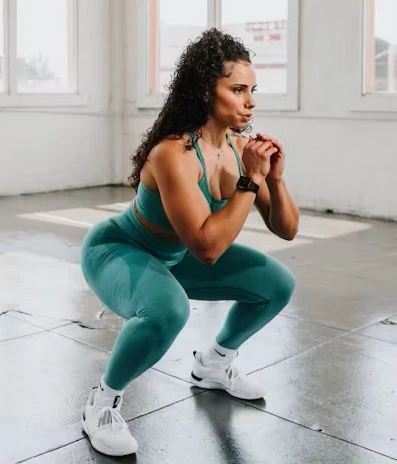
Squats (back, front, goblet, or bodyweight to start) Leg presses Split squats and lunges Hip hinges like Romanian deadlifts and trap-bar deadlifts Step-ups Calf raises, for your “second heart”
What matters more than exercise choice is how you train. Work through a range of motion that’s appropriate for your body and goals. Progressively overload by adding weight, reps, sets, or difficulty over time, because your body adapts to what you ask of it and stops adapting when you stop asking for more. And put in real effort: sets should end near the point where you couldn’t do many more good reps. A lot of people “exercise” for years without getting stronger because they never challenge themselves.
If you’re new to lifting, older, or managing a health condition, start where you are. A bodyweight sit-to-stand from a chair is resistance training, and so is a set of step-ups on your bottom stair. Progress from there, and consider working with a qualified coach or physiotherapist if you’re unsure about technique.
The Bottom Line
Longevity doesn’t have to be expensive or complicated. Some of the best-supported interventions are unglamorous: move often, build strength, and train your cardiovascular fitness. Strong legs are linked to lower mortality, resistance training improves blood pressure and metabolic health, and combining lifting with aerobic exercise appears to offer the greatest benefit.
Lift weights, do your cardio, stay capable, and don’t skip leg day.
Resources
▶DON’T SKIP LEG DAY… your longevity may depend on it | Dr.Layne Norton
▶This One Muscle Is Destroying Your Leg Circulation (And You Don’t Even Know It) | Dr.Laura