
Push exercises form the foundation of any effective upper-body training program. Whether you’re chasing a bigger chest, greater pressing strength, or better real-world function (like pushing open heavy doors or getting up from the ground), horizontal pushing movements should be a non-negotiable staple in your workouts. These movements build powerful pecs, strong shoulders, and impressive triceps while improving shoulder stability and overall athleticism.
What Are Horizontal Push Exercises?
Horizontal push exercises involve pressing a weight (or your bodyweight) directly away from your torso in a forward motion, roughly parallel to the ground. They generally fall into two categories:
- Pushing a weight away from your body — such as the bench press or dumbbell chest press.
- Pushing your body away from a surface — like classic push-ups or their variations.
Unlike vertical pushes (e.g., overhead press), horizontal pushes emphasize the chest more prominently while still hitting the front shoulders and triceps.
Muscles Worked in Horizontal Push Exercises
Horizontal pressing primarily targets the anterior chain (front) of the upper body:
- Chest (Pectoralis Major) The star of the show. The pecs drive most of the pressing power in horizontal movements. Flat variations (bench press, standard push-ups) hit the mid and lower chest hardest. Incline angles shift more emphasis to the upper chest for balanced development.
- Shoulders (Anterior Deltoids) The front delts act as key supporters. They assist the chest during the press and help stabilize the shoulder joint. As the pressing angle becomes more inclined, the front delts take on a bigger role. Note: Weak or unstable shoulders are a common bottleneck in pressing strength so prioritize good form and mobility.
-Triceps These muscles handle elbow extension (straightening your arms). They’re heavily involved throughout the movement and dominate the lockout phase. Key insight: If you struggle with push ups or your bench press stalls, weak triceps are often the culprit. Accessory work pays off here.
- Serratus Anterior (“Boxer’s Muscle”) This often-overlooked muscle protracts and stabilizes the shoulder blades. It’s especially active in push-ups and floor-based variations where the scapulae can move freely. Strong serratus = better shoulder health, improved pressing power, and reduced risk of impingement.
The Best Horizontal Push Exercises
Here are the must-know moves, from beginner-friendly to advanced. I’ve included machine and cable options for gym-goers and added chest dips for those who want a bodyweight compound finisher:
Push-Ups (Bodyweight King) Perfect for beginners and home workouts. Hands slightly wider than shoulders, body in a straight line from head to heels. Lower until your chest nearly touches the floor, then push back up. Variations: Knee push-ups (easier), elevated feet (harder), diamond push-ups (more triceps), or archer push-ups for advanced strength.
Barbell Bench Press (The Classic) Lie on a flat bench, unrack the bar with a grip slightly wider than shoulders. Lower the bar to your mid-chest with control, then drive it explosively upward. Why it rules: Builds raw strength and muscle like nothing else.
Dumbbell Bench Press Similar setup to barbell but with dumbbells. Allows a deeper stretch and fixes left-right imbalances. Great for muscle growth. Incline Bench Press (Barbell or Dumbbell) Set the bench to 15–45°. Targets the upper chest more while still working the whole pressing chain. Excellent for balanced chest development.
Machine Chest Press (Beginner-Friendly) Sit on the chest press machine with your back fully supported. Adjust the seat so the handles align with your mid-chest. Grip the handles and press forward until your arms are extended, then slowly return. Why include it: Provides constant tension, easy progression, and is ideal for beginners or high-volume accessory work without needing a spotter.
Cable Chest Press (Standing or Seated Variation) Set cable pulleys at chest height (or use a functional trainer). Grab the handles and step forward into a staggered stance for stability. Press the handles straight forward, bringing your hands together at the end range for a strong contraction. Why it’s great: Offers constant tension through the full range, improves core stability in standing variations, and is very shoulder-friendly. Great for finishing sets or fixing imbalances.
Floor Press (Barbell or Dumbbell) Lie on the floor and press. Limits range of motion at the bottom, which is fantastic for building lockout strength and protecting sore shoulders.
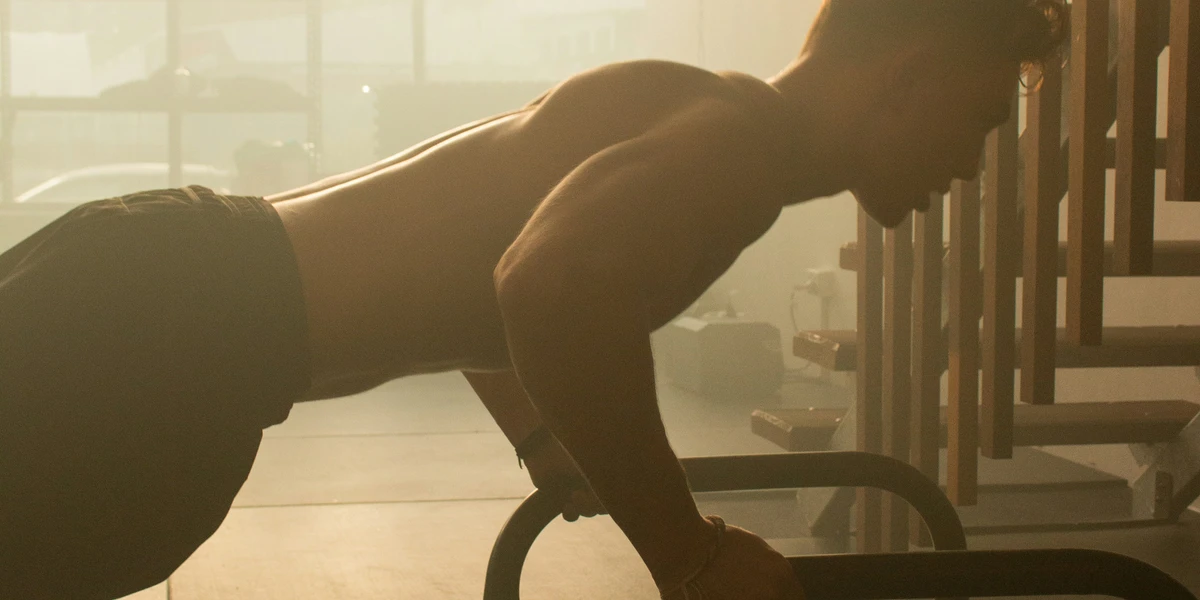
Chest Dips (Advanced Bodyweight Option) Use parallel bars or dip bars. Lean your torso slightly forward to emphasize the chest (rather than staying upright for triceps focus). Lower until your shoulders are below your elbows (or as deep as comfortable), then press back up. Note: While dips have a more vertical body position, chest-focused dips function as a powerful horizontal push movement because they heavily recruit the same prime movers (pecs, front delts, and triceps). Add weight via a belt once bodyweight becomes easy. Tip: Keep shoulders away from your ears and avoid shrugging.
Common Horizontal Push Mistakes (and How to Fix Them)
Even experienced lifters fall into these traps. Here’s what to watch for:
❌ 1. Elbows Flaring Out Too Wide
Problem: Puts excessive stress on the shoulders and reduces power.
Fix: Tuck your elbows to about a 45–60° angle from your torso. Cue: “Elbows to your pockets.”
❌ 2. Weak Setup / Loose Upper Back
Problem: Shoulders roll forward, limiting force and increasing injury risk.
Fix: Retract and depress your shoulder blades before every rep (imagine pinching a pencil between them).
Use the cue “bend the bar” or “pull the bar apart” to create tension.
❌ 3. Short Range of Motion
Problem: Less muscle activation and slower gains.
Fix: Use full (pain-free) depth — bar to chest on bench press, chest nearly to floor on push-ups.
Drop the weight if needed to maintain control. On machines and cables, control the negative phase fully.
❌ 4. Bouncing the Bar Off Your Chest (or Using Momentum on Machines/Cables)
Problem: Uses momentum instead of muscle, risking injury.
Fix: Pause briefly at the bottom for a controlled eccentric (lowering) phase.
❌ 5. Lifting Your Butt or Arching Excessively
Problem: Reduces stability and cheats the movement.
Fix: Keep your glutes and upper back glued to the bench while maintaining a natural (not exaggerated) arch. Drive through your feet.
❌ 6. Gripping Too Narrow or Too Wide
Problem: Limits power and stresses joints.
Fix: Find a grip where your forearms stay vertical at the bottom (usually just outside shoulder width).
Final Final Tips for Better Pushing Performance
Focus on quality over quantity every time you train. Slow down your reps stay in control and make each push deliberate rather than rushed. Prioritise a strong setup with correct arm positioning, while keeping your core, upper back, glutes and legs engaged. Choose loads that allow you to maintain good form and full range of motion rather than chasing heavier weights at the expense of technique. Over time small improvements in control consistency and positioning will add up to big gains in strength muscle and joint health.
Resources:
▶The RIGHT Way To Do Push-Ups (PERFECT FORM) | Mindpump
▶How To Train The Bench Press (Technique Tips & Best Exercises) | Juggernaut Training System
▶How To Do Dips For A Bigger Chest and Shoulders | Jeff Nippard