
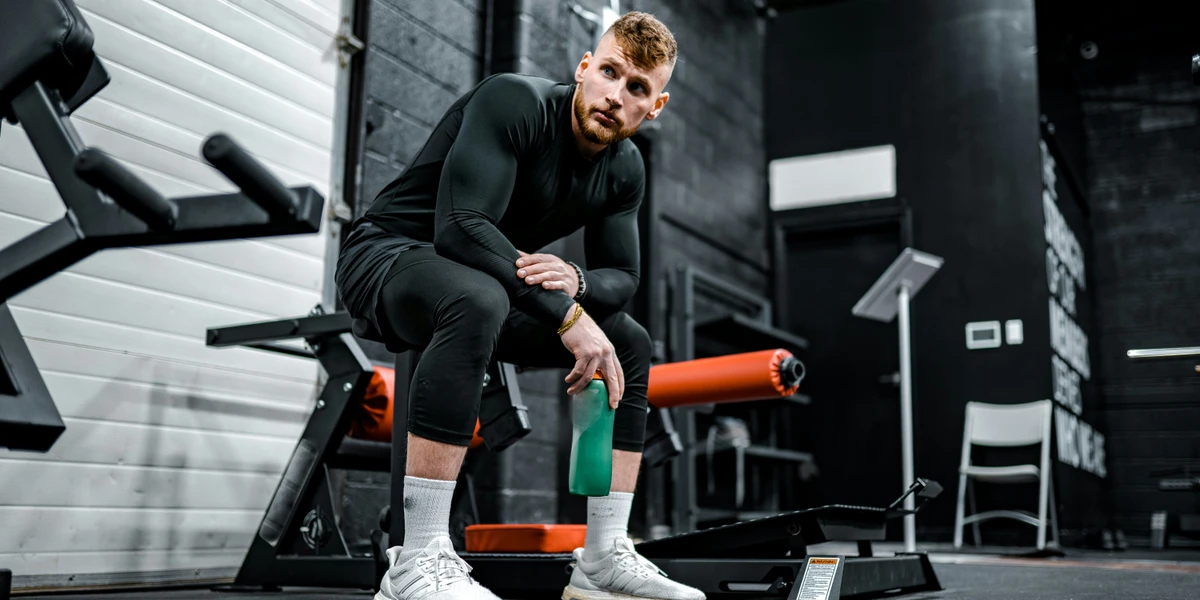
For many years, short rest periods of 30 to 60 seconds were commonly recommended for muscle growth. The belief was that shorter rests would increase the feeling of a “muscle burn,” create a greater hormonal response, and ultimately lead to more muscle growth.
However, modern research has challenged this belief.
Studies led by exercise scientist Dr. Brad Schoenfeld have shown that longer rest periods often produce better results for both muscle growth and strength. In one landmark study, participants resting three minutes between sets experienced significantly greater muscle growth and strength gains than those resting just one minute.
Why? Because longer rest periods allow you to maintain performance from set to set.
Why Rest Matters
Every hard set creates fatigue.
When you rest, your body replenishes energy stores, clears some of the fatigue produced during the set, and prepares your muscles and nervous system for the next effort.
If you don’t rest long enough, you’ll often find that:
- You perform fewer repetitions on subsequent sets.
- You need to reduce the weight.
- Your technique begins to deteriorate.
- Total training volume decreases.
Since training volume is one of the key drivers of muscle growth, cutting your rest periods too short may actually limit your progress.
The Sweet Spot for Muscle Growth
Current evidence suggests that around two minutes of rest between sets is generally sufficient for maximizing muscle hypertrophy (muscle growth).
This doesn’t mean that exactly two minutes is optimal for everyone. Individual recovery rates vary, and different exercises create different levels of fatigue.
As a general guideline when doing heavy compound exercises e.g. squats, deadlifts, bench press, overhead press and rows etc, aim for approximately 2 to 3 minutes of rest, and potentially longer if performance is dropping significantly.
For isolation exercises e.g. bicep curls, tricep extensions, lateral raises, leg extensions, hamstring curls etc., rest periods of 1 to 2 minutes are often enough because these exercises create less overall fatigue.
Strength Training Requires More Recovery
As weights get heavier, recovery demands increase.
World-class strongman and powerlifter athletes may rest 10 minutes or more between heavy sets. While most gym-goers don’t need that much recovery, the principle remains the same: heavier loads generally require longer rest periods.
A practical guideline might look like this:
Beginners: 2 to 3 minutes Intermediate Lifters: 4 to 6 minutes Advanced Lifters: 6 to 8 minutes or longer when training near maximal loads
For accessory and isolation work 1 to 3 minutes is usually sufficient.
If your performance is dropping dramatically from set to set, longer rest periods may help you maintain training quality.
Should You Time Your Rest Periods?
While timers can be useful, many experienced lifters benefit from a more flexible approach known as auto-regulation.
Instead of watching the clock, you simply rest until you feel ready to perform the next set with good technique and the intended weight.
Research has shown that self-selected rest periods often produce similar performance outcomes to fixed rest intervals while making workouts more efficient.
The key question becomes:
“Am I recovered enough to perform my next set properly?”
If the answer is no, take a little more time.
The Bottom Line
For most people looking to build muscle, resting around 2 to 3 minutes between sets is an excellent starting point.
For heavy compound lifts, longer rest periods are often beneficial because they allow you to maintain strength, volume, and technique throughout the workout.
For smaller isolation exercises, 1 to 2 minutes is usually enough.
Rather than obsessing over the stopwatch, focus on your performance. If you’re still breathing heavily, your muscles are shaking, or your strength is dropping significantly, you probably need more recovery.
Remember: the goal isn’t to finish your workout as quickly as possible. The goal is to perform enough quality work to drive progress.
Sometimes the most productive thing you can do between sets is simply wait a little longer.
Resources:
▶ Rest Between Sets | Brad Schoenfeld, PhD
▶ Rest Between Sets for Strenght Training | Australian Strenght Coach