
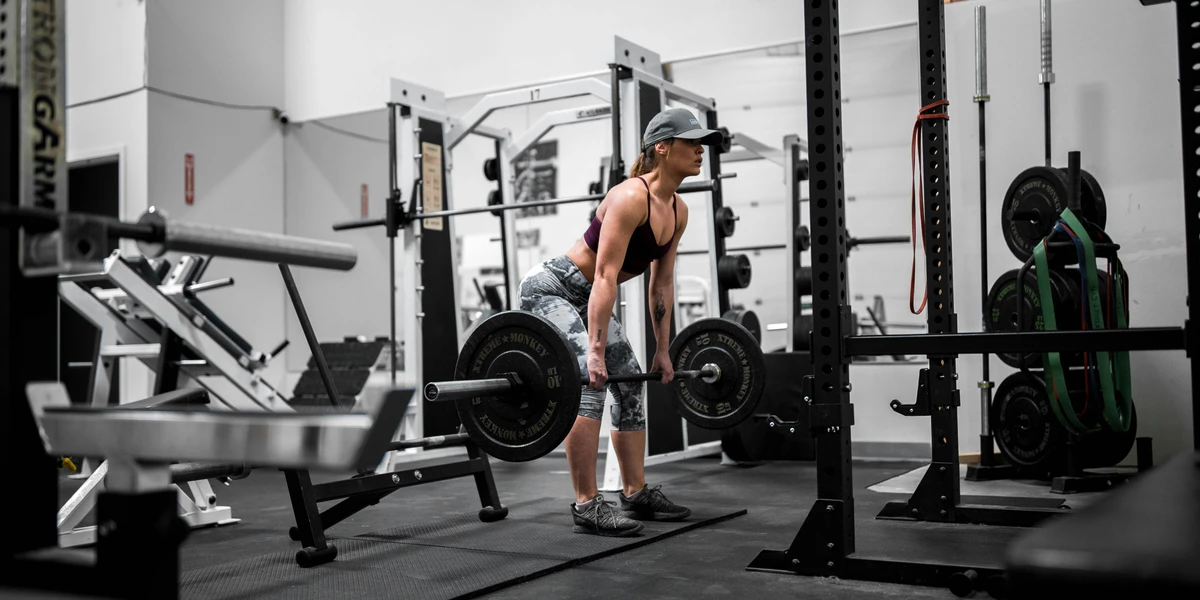
Lifting weights and staying injury free doesn’t start with your legs or arms. It starts with your core. One of the most overlooked skills in strength training is proper breathing and bracing. When done correctly, it creates a stable foundation that protects your spine and improves power output.
Why Core Stability Matters
Your lower spine is one of the most vulnerable and most important areas of your body during lifting. When your spine is stable, force transfers efficiently from your core into your arms and legs. When stability is lost, injury risk rises sharply.
Unlike many other parts of your skeleton, the lower spine has limited bony protection. Stability must be created by the muscles surrounding your abdominal cavity: your abdominals, obliques, back muscles, diaphragm, and pelvic floor.
When you breathe and brace correctly, these muscles work together to create a pressurized cylinder around your spine. Think of it as inflating a strong internal support system that keeps your body rigid and safe while you lift.
Follow these breathing and bracing mechanics to build that stability:
1. Learn Proper Diaphragmatic Breathing
Many people misunderstand what belly breathing means. It is not about pushing your stomach straight forward, and it is definitely not chest breathing.
Chest breathing causes your shoulders to rise and your chest to expand. This limits diaphragm use and can push your spine into an overextended position. Instead, you want diaphragmatic breathing.
Here is how to practice it:
-
Place your thumbs on your sides over your obliques, not directly on your abs.
-
Inhale deeply and try to push your thumbs outward.
-
Feel your torso expand in all directions: sides, back, and lower abdomen.
-
Relax and repeat.
The key cue is to fill the tank rather than push forward. Most expansion should be felt around your sides. You can also place your hands on your lower back or just below your belt line to feel 360 degree expansion.
At this stage, focus only on breathing, not bracing.
2. Add the Brace
Once you have taken a full diaphragmatic breath, the next step is bracing.
Bracing means tightening your core muscles as if someone were about to punch you in the stomach. This locks in the pressure created by your breath and forms stable support around your spine. The goal is 360 degree tension that maximizes stability and force transfer during movements like squats and deadlifts.
3. Keeping a neutral spine
Your ability to breathe and brace effectively depends heavily on spinal position. If your back is overly rounded or excessively arched, your ability to expand your torso is reduced. A neutral spine allows your rib cage and pelvis to stack properly, creating ideal alignment for pressure generation.
A helpful cue is ribs down. This prevents over arching and keeps your torso stacked. Once you find that neutral position, maintain it throughout the lift.
A helpful cue is “ribs down.” This prevents over-arching and keeps your torso stacked. Once you find that neutral position, maintain it throughout the lift.
Try this simple test:
-
Place your fingers on your sides and breathe normally.
-
Then exaggerate an arch in your lower back and try again.
-
Next, round your back and try again.
You’ll notice your breathing capacity drops in both extreme positions. Neutral alignment unlocks your full stability potential.
Applying Breathing and Bracing to Your Lifts
The same breathing and bracing mechanics apply to nearly every compound lift, e.g. squats, deadlifts, presses etc.
So before each rep:
-
Set your neutral spine.
-
Take a diaphragmatic breath.
-
Brace your core.
-
Perform the lift while maintaining pressure.
Mastering this sequence unlocks greater strength potential while keeping your spine protected.
Final Thoughts
Breathing is automatic, but optimal breathing for lifting is a skill that must be trained. The better you become at diaphragmatic breathing and bracing, the more stable and powerful your lifts will be.
Whether you practice with simple hand cues, use a lifting belt for feedback, or add tactile tools like lacrosse balls, investing time in this skill pays off in both performance and injury prevention.
Strong lifts start with a strong core, and a strong core starts with how you breathe.
Resources
▶ How to Brace your Core during a Squat| Squat University
▶ How to Breath when you want to Squat Heavy | Austalian Strenght Coach