
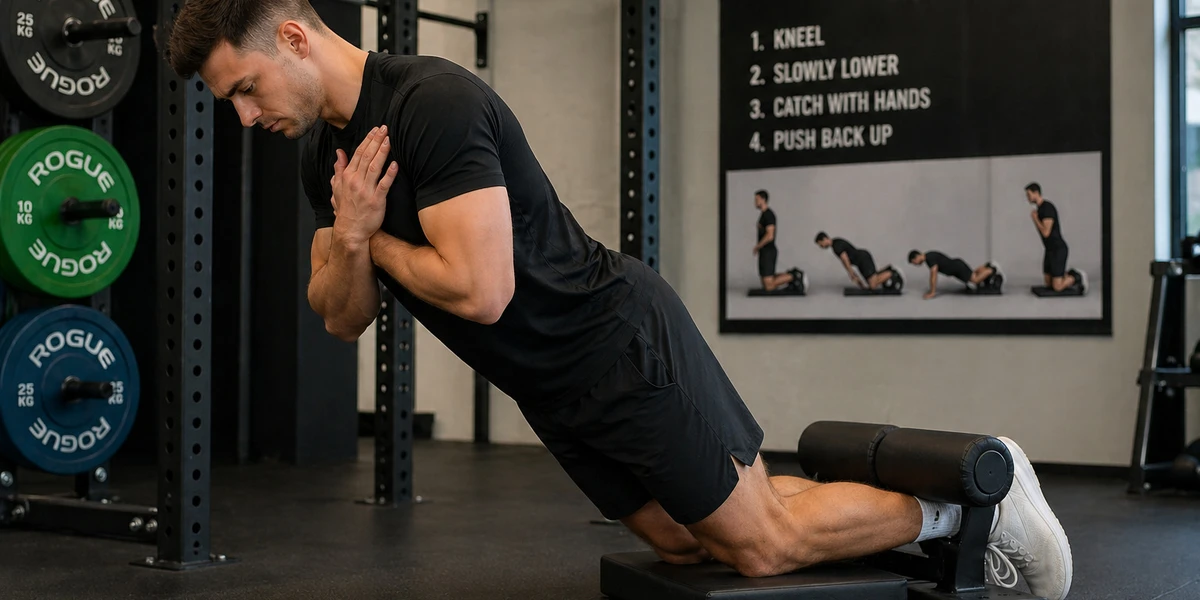
If you want stronger legs, better sprinting ability, and knees that feel more stable, the Nordic curl might be one of the best exercises you’re not doing yet. It is a bodyweight exercise that trains the back of your thighs (your hamstrings) by slowly lowering your body toward the floor using just your knees. It’s been around since the 1800s, but it didn’t hit mainstream awareness until an ESPN feature showcased NFL player Adam Archuleta demonstrating his elite Nordic strength, progressing from an overlooked high school athlete to a first-round draft pick. Similar patterns show up across sports e.g. Martin St. Louis, who went from undrafted to MVP and Stanley Cup champion, was known for his Nordic ability, and Olympic champion Jonathan Edwards, who used Nordic-style knee flexion work for over a decade while setting a triple jump world record that still stands today. They all highlighting why coaches continue to use this exercise to build stronger, more resilient, and more powerful athletes.
Why Should Beginners Care About the Nordic Curl?
Your hamstrings work hard when you run, jump, climb stairs, or even walk quickly. They act like brakes to slow you down safely. When these muscles are weak, especially when they’re stretched out, they’re more likely to get injured. The Nordic curl is excellent at making your hamstrings stronger exactly in that stretched position. Studies show that doing Nordic curls regularly can cut your risk of hamstring injuries by up to 50%. That’s a huge benefit for weekend warriors, runners, soccer players, or anyone who wants to stay active and injury-free for years. Even better? You don’t need any fancy gym machines. All you really need is something to anchor your feet (like a partner, a couch, or a barbell).
The Big Mistake Most Beginners Make
Trying to do a full Nordic curl on your first try. Most people collapse straight down or feel too much strain in their knees or lower back. That’s not because you’re weak, it’s because your body isn’t ready yet. The secret is progression. You start with easier versions and slowly build up over weeks and months. This way, you get stronger without getting hurt or discouraged.
Simple Technique Tips
- Keep your body in a straight line (knees to shoulders) — no folding at the waist.
- Squeeze your glutes (butt muscles) when coming back up.
- Go slow on the way down — control is more important than speed.
- Use your hands for help — it’s smart, not cheating!
- If your knees hurt, stop and go back to an easier level.
How Often Should You Do It?
- Train Nordics 1 to 2 times per week
- Do 2 to 4 sets = Start with 3 to 6 slow reps per set
- Rest well between sets
Remember: Perfect form with fewer reps beats sloppy form with more reps.
Final Verdict
The Nordic curl is one of the most evidence-backed hamstring exercises available for injury prevention, speed development, and long-term athletic durability. However, you shouldn’t rush the progression, overload the volume, or ignore technique; otherwise, you’ll miss the benefits. Rather, build progress gradually and execute it well
Resources:
▶Tyreek Hill 10 Nordic Hamstring Curls