
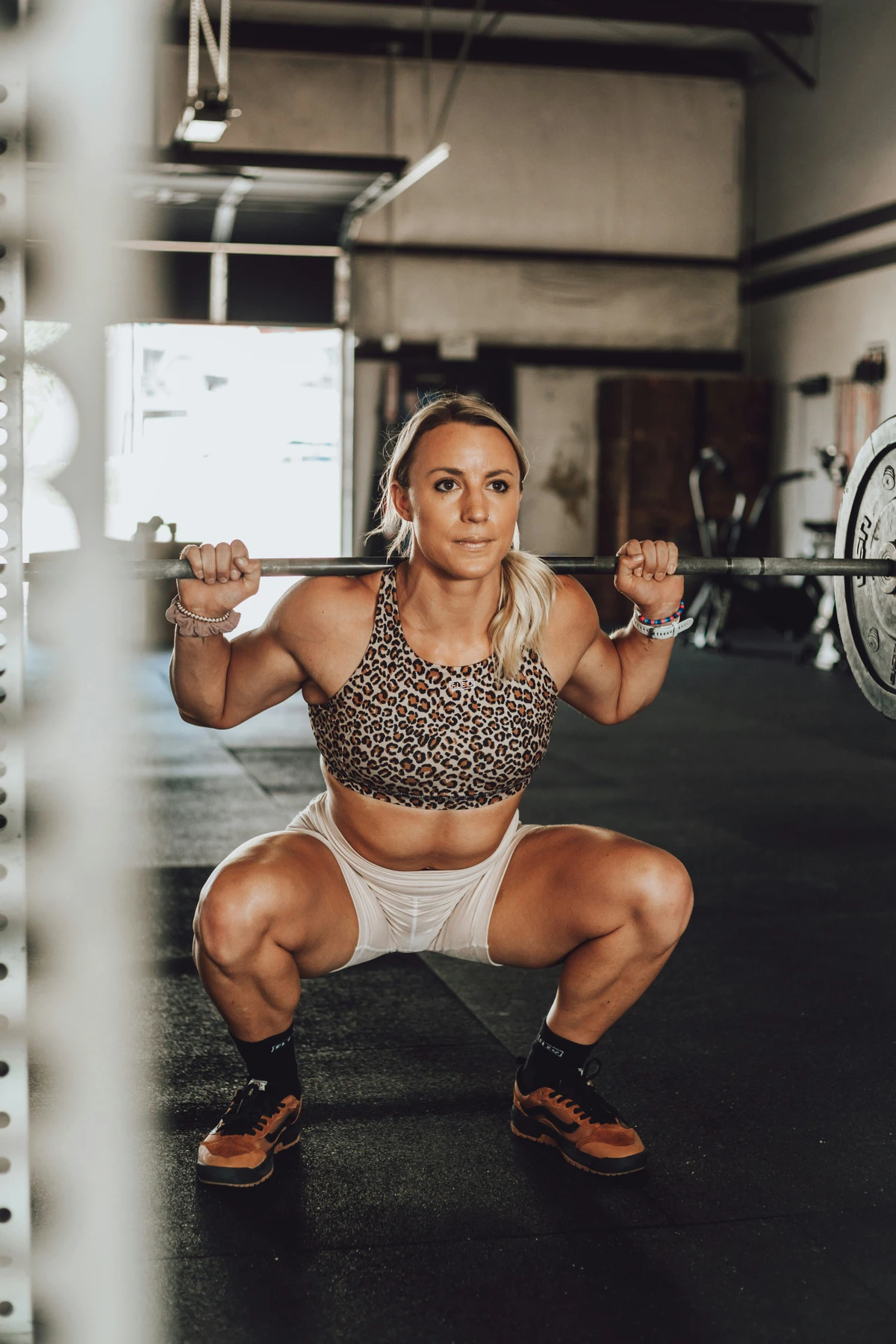
Have you ever wondered why some people can squat all the way to the floor while others struggle to reach parallel?
Or why one person can keep a perfectly upright chest while another naturally leans forward, even though both have excellent technique?
The answer is surprisingly simple: your anatomy.
Many people assume there is one “perfect” way to squat, but our bodies are built differently. Your bone structure, hip anatomy, and mobility all influence how your squat looks. Understanding these differences can help you squat more comfortably, improve your performance, and reduce your risk of injury.
What Causes the Difference in Squat Technique?
Two major factors determine how you naturally squat:
- Your bone structure (anthropometry)
- Your hip anatomy
Neither of these can be changed through training, so your goal isn’t to copy someone else’s squat, it’s to find the squat that works best for your body.
1. Bone Structure (Anthropometry)
Your bone lengths have a significant impact on your squat mechanics.
The two most important bones are:
- Femur – your thigh bone
- Tibia – your shin bone
People with longer femurs naturally need to lean further forward during a squat to keep the barbell balanced over the middle of their feet. This forward lean is completely normal and is not a sign of poor technique.
On the other hand, people with shorter femurs can usually stay much more upright while squatting.
This is why two experienced lifters performing equally good squats can look completely different. One may have a very upright torso, while another naturally leans forward because of their body proportions—not because they’re squatting incorrectly.
2. Hip Anatomy
Your hips are a ball-and-socket joint.
The ball is the top of your femur, and it fits inside the socket of your pelvis.
The shape and depth of this socket varies from person to person.
Some people have:
- Deep hip sockets
- Shallow hip sockets
This difference is largely genetic—you inherit it from your parents.
Deep Hip Sockets
People with deeper hip sockets generally run out of hip movement sooner during a squat.
As they descend, the femur contacts the front of the hip socket earlier, causing the pelvis to begin rotating underneath the body. This often results in the lower back rounding, commonly called a “butt wink.”
For these individuals, forcing a very deep squat often means sacrificing spinal position.
Shallow Hip Sockets
People with shallower hip sockets usually have more room for the femur to move within the joint.
This allows them to:
- squat much deeper
- maintain a more upright torso
- keep a neutral spine throughout the movement
What Can You Do To Improve Your Squat Technique
Although you can’t change your bone structure or hip anatomy, you can adjust your squat technique to better suit your body.
1. Find Your Ideal Stance Width
There is no universally perfect squat stance.
Some people squat best with their feet about shoulder-width apart, while others perform better with a wider stance.
Experiment with different foot positions until you find the stance that allows you to squat as deeply as possible while keeping your spine in a neutral position.
For many people with deeper hip sockets, widening the stance slightly creates more room for the hips to move, allowing a deeper and more comfortable squat.
2. Don’t Force Extra Depth
A common mistake is trying to squat deeper simply because someone else can.
If your lower back starts rounding before reaching full depth, your body may simply be telling you that you’ve reached the limit of your available hip movement.
Instead of forcing the movement, stop at the deepest position where you can maintain good technique.
Remember:
The best squat depth is the deepest depth you can achieve while maintaining a neutral spine.
3. Improve Your Ankle Mobility
While your hip anatomy can’t be changed, your ankle mobility often can.
Limited ankle flexibility can make it difficult for your knees to travel forward, reducing squat depth and causing excessive forward lean.
Regular ankle mobility exercises may help you:
- squat deeper
- keep your chest more upright
- improve balance and stability
4. Elevating Your Heels To Improve Mobility
If limited ankle mobility is preventing you from reaching a comfortable squat depth, heel-elevated squats can be an excellent solution.
Elevating your heels shifts your centre of mass slightly forward, allowing you to maintain a more upright torso while squatting deeper. This also reduces the amount of ankle dorsiflexion (the ability to bring your knee forward over your toes) required during the movement.
For many lifters, this results in:
- greater squat depth
- a more upright torso
- improved balance and stability
- better squat mechanics
- increased emphasis on the quadriceps (front of the thighs)
Because of this, heel-elevated squats are particularly useful for people with limited ankle mobility or those wanting to place more focus on building their quadriceps.
Simple ways to elevate your heels:
Weightlifting Shoes
Weightlifting shoes have a built-in raised heel (typically 0.5–1 inch) that provides a stable base while improving squat mechanics. They’re an excellent long-term investment if you squat regularly.
Squat Wedges (Slant Boards)
Squat wedges are purpose-built angled platforms made from EVA foam or hard plastic. They provide a stable and consistent heel elevation and are becoming increasingly popular in both commercial and home gyms.
Weight Plates
If you don’t have specialised equipment, you can simply place the heels of your shoes on a pair of small weight plates. This is an easy and inexpensive way to try heel-elevated squats before investing in dedicated equipment.
While heel elevation can significantly improve squat performance for many people, it shouldn’t replace regular ankle mobility work. Improving ankle flexibility over time will give you more movement options and help you squat efficiently, whether you’re wearing lifting shoes or not.
5. Choose a Squat Depth That Matches Your Goals
Squat depth should be matched to your individual goals, as there is no single “perfect” depth that suits everyone. Your ideal range will depend on your body, comfort, and the purpose of your training. For general fitness and strength, aim to squat as deep as you can while maintaining good technique and a neutral spine, as this allows you to safely work through a larger range of motion. For muscle growth, extremely deep squats are not essential; what matters more is using a controlled range of motion that you can consistently perform with strong form, focusing on quality repetitions rather than forcing extra depth. When training for specific sports, the requirements become more defined. Powerlifters should prioritise reaching competition standards, (e.g. hip crease must drop below the top of the knee), while Olympic weightlifters benefit from practising deeper squat positions that reflect the demands of the clean and snatch, working within the limits of their mobility and safety.
6. Choose a Squat Variation That Matches Your Goals
The best squat variation for you is also highly individual. Whether it’s a high-bar back squat, low-bar back squat, front squat, goblet squat, safety bar squat, or a particular machine variation, the most effective choice depends on your unique anatomy, mobility, injury history, and goals. What feels amazing for one person can feel awkward or even risky for another. Experiment safely, listen closely to your body, and choose the variation that lets you move well, feel strong, and progress consistently.
Be sure to check the resources below for practical squat variation ideas.
Final Thoughts
Mastering the squat is one of the most powerful foundations you can build in your training journey — but it’s never one-size-fits-all. Your body is unique, and that’s your greatest advantage. Bone structure, leg length, and hip anatomy all shape your strongest, most natural squat. Stop trying to copy someone else’s form or chasing everyone else’s depth. Instead, confidently explore and own the stance, depth, and variation that perfectly matches your body. When your squat aligns with your individual anatomy, it will feel unstoppable — stronger, smoother, and far kinder to your joints and lower back, setting you up for lasting progress and confidence in every session.
Resources:
▶Squat Form For Your Anatomy| Squat University
📝Can’t (or Don’t Want to) Barbell Back Squat? Here are 18 Alternatives to Try Instead | Aimee Heckel